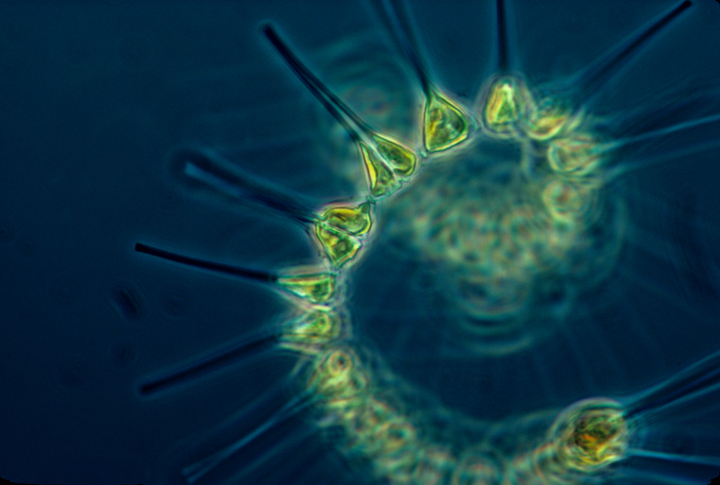
Something unusual is happening in Maine’s Casco Bay: a massive bloom of microscopic phytoplankton is turning parts of the water brown and appears to be killing shellfish.
The culprit is Karenia mikimotoi, a naturally occurring type of phytoplankton. Maine officials have detected concentrations reaching roughly 2 million cells per liter around Portland Harbor. The bloom has also been associated with dead and dying clams in areas around Brunswick, Harpswell, Maquoit Bay and Middle Bay.
So why does a microscopic organism matter?
At high concentrations, K. mikimotoi can stress marine animals and contribute to depleted oxygen in the water as the bloom grows and eventually decomposes. Bottom-dwelling creatures like clams can’t simply swim away when conditions deteriorate.
The good news is that this particular phytoplankton isn’t considered a human-health threat in the same way as the toxin-producing organisms responsible for Maine’s better-known “red tide.” But officials are still urging people to follow existing shellfish-closure guidance.
And this isn’t the first time Casco Bay has seen it. A much larger Karenia mikimotoi bloom occurred in 2017, when concentrations reached roughly 44 million cells per liter and were associated with significant marine-life mortality.
Scientists are now watching closely to see how large the current bloom becomes, how long it lasts, and what environmental conditions caused it to take off.